
405 Squadron Lancasters JB-280 and ND-423
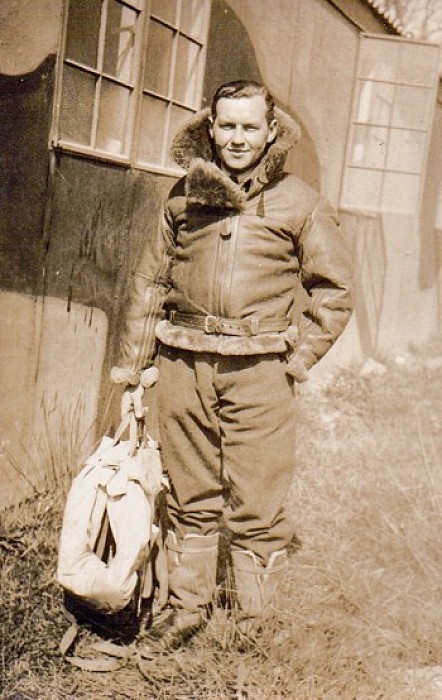
Dennis Frederick Smith
The Story
Dennis 'Denny' Smith was my mother's cousin. His 'Air Gunner's Flying Log Book' and his wartime personal diary came into my possession some years ago. Unfortunately his medals were stolen in a burglary many years after the War. The logbook and diary prompted my research into his story...
Dennis gave up his newly set up business as a canine specialist vet and enlisted in the RAF at the age of 20 years.
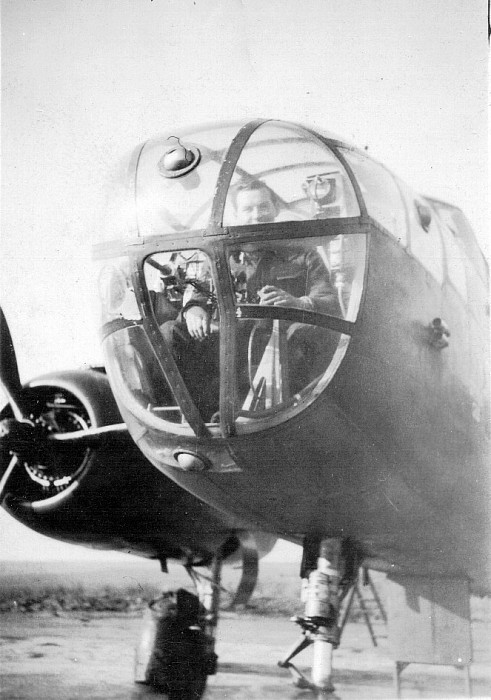
Dennis Smith in a B25 Mitchell
Training began at No:4 Air Gunnery School, Morpeth in Northumberland flying in the unpopular Blackburn Botha, which was very heavy and under powered, often taking the whole of the runway to get airborne.
Many of the airmen who flew here were Polish and several settled in the Morpeth area following the war. A large number of Polish casualties including airmen from this base are buried in St Marys Church, Morpeth.
After qualification, four weeks later he moved to 180 Squadron 'A' Flight at Foulsham, Norfolk and spent the next six months training, flying a total of 125 hours, almost exclusively in Mitchells.
He was then posted briefly to 88 Squadron, Swanton Morley where he crewed up with P/O Gordon Drimmie, F/Sgt Kevin Evans and F/Sgt Allan Hazlehurst.
In June 1943 Dennis and the crew moved to No:22 Operational Training Unit Wellesbourne and Gaydon, flying 16.5 hours in Wellingtons, before moving in July to 1659 Conversion Unit RCAF Topcliffe. Two weeks were spent training in Halifaxes. Mid-upper gunner Sgt Raymond Peterson joined them in early July followed by Sgt Eric 'Ginger' Lane.
Training complete, Dennis joined 428 Squadron RCAF Middleton St George, County Durham and on 2nd August 1943 flew his first Op, to Hamburg.
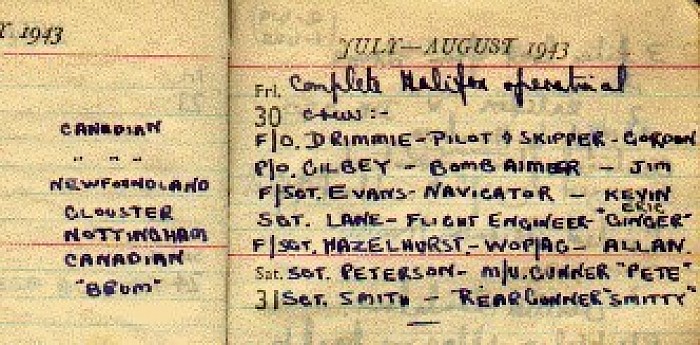
Dennis Smith's Diary Entry July 30th 1943
The final crew line-up who left Topcliffe for 428 Squadron RCAF at Middleton St George were:
F/O Gordon Drimmie - pilot and skipper
F/O Jim Gilbey - bomb aimer
F/Sgt Kevin Evans - navigator
F/Sgt Eric Lane - flight engineer
F/Sgt Allan Hazlehurst - wireless operator/air gunner
Sgt Raymond Peterson - mid-upper gunner
Sgt Dennis Smith - rear gunner
They flew eight operations together with 428 Sqn between 02/08/1943 and 27/08/1943 including Peenemunde (the famous V2 Rocket factory) on the 17th, flying Halifax bombers.
The crew transferred to 405 'Vancouver' Squadron from September 1943. They were now part of 8 Group Pathfinders, a highly specialised force, dedicated to target-marking for the rest of Bomber Command which was known as Main Force. Its crews acted not only as target-markers, but as guides and leaders on the long routes to the targets.
They flew 14 missions together, 12 of them in Lancaster JB-280, nicknamed 'Gremlin Gus'.
At the end of November 1943 Dennis was admitted to Ely Hospital with frostbitten ears. This was a common problem for rear gunners who often removed the perspex panel in the rear turret to gain better visibility. Outside temperatures of many degrees below zero caused the frostbite.
A combination of his hospitalisation and leave for the other crew meant that a different crew were manning JB-280 when it was shot down at
Nieuw-Schoonebeek, Drenthe, Holland on January 2nd 1944 killing all crew members:
Flg Off Thomas Henry Donnelly DFM RCAF (pilot, age 23)
Sgt Leslie George Robert Miller RAFVR (flight engineer)
Flg Off Alexander Jerry Salaba RCAF (navigator)
Flt Sgt William Leonard John Clark RCAF (air bomber, age 22)
Sgt Brian Sidney James West (wireless operator/air gunner)
Sgt Ronald Everest Watts (air gunner, age 33)
Sgt Ronald Zimmer RCAF (air gunner)
The pilot of the Messerschmitt Bf 110 night fighter that shot down JB280 was Leutnant Friedrich “Fritz” Potthast, an ace with 11 kills to his name (8 at night and 3 by day) when he was shot down nearly five months later on the night of 21–22 May 1944 near Sourbrodt in eastern Belgium. Lancaster JB280 was his fourth kill.
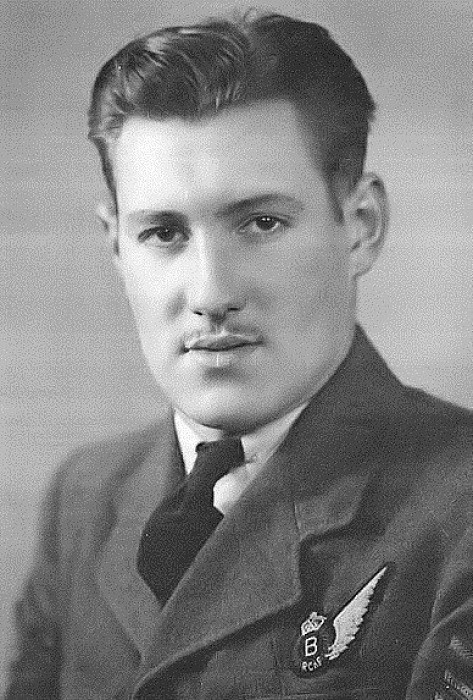
William Leonard John Clark
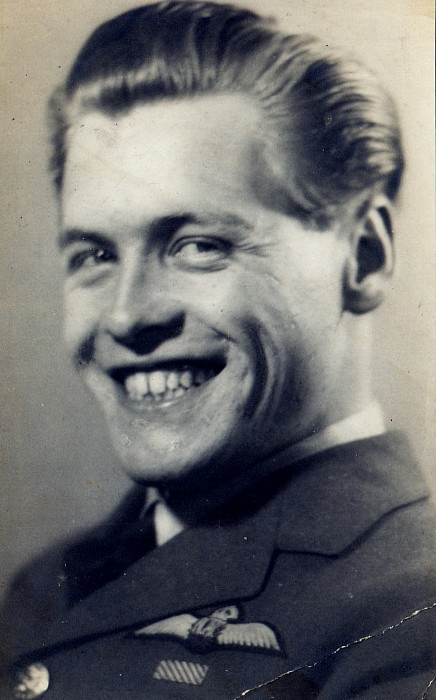
Thomas Henry Donnelly
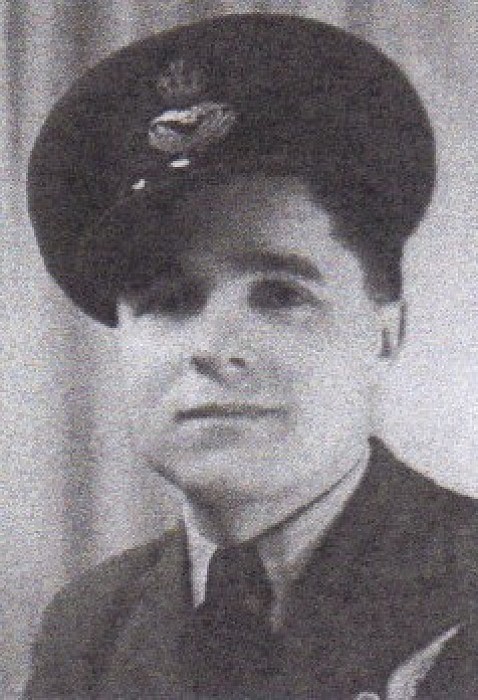
Alexander Jerry Salaba
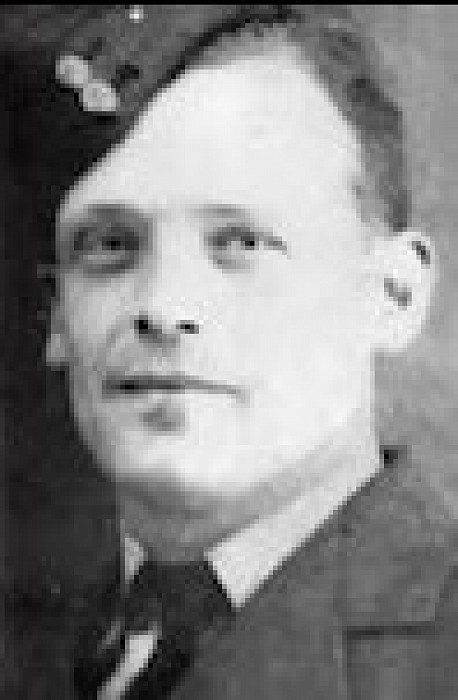
Ronald Everest Watts
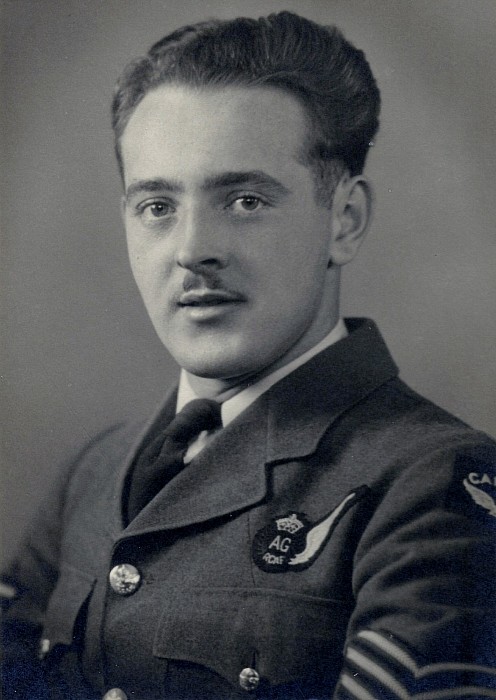
Ronald Zimmer
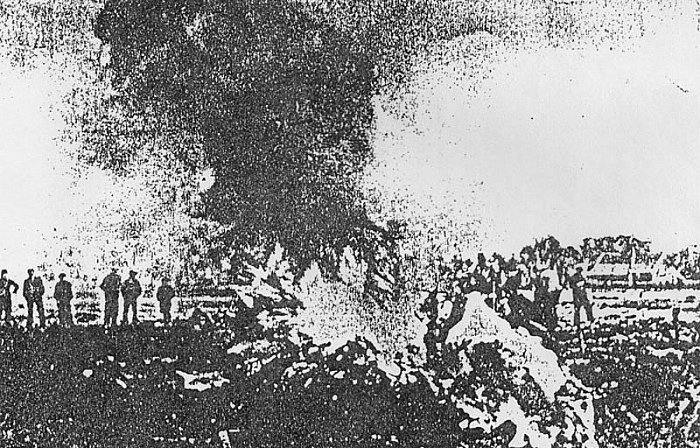
JB-280 still burning the day after she crashed
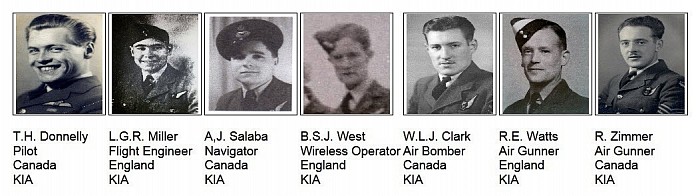
The complete crew of JB-280 lost over Nieuw-Schoonebeek, Drenthe Jan 1944
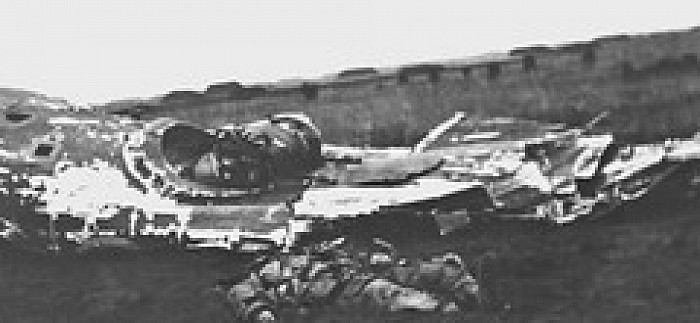
JB-280 crash site January 1944
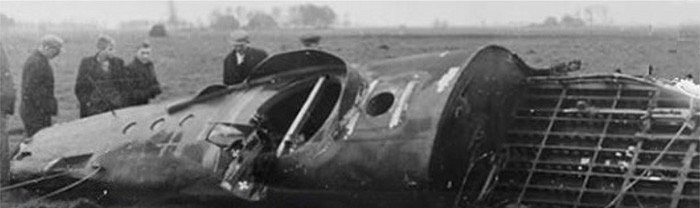
JB-280 crash site January 1944
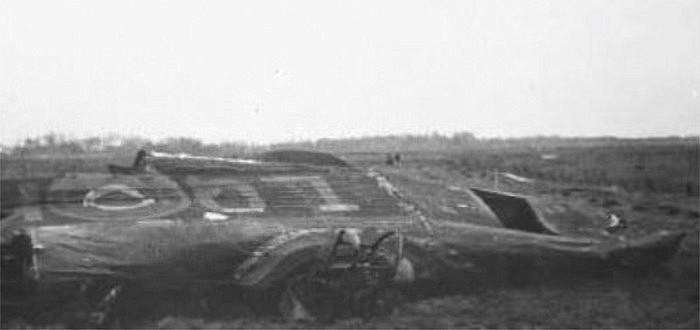
JB-280 crash site January 1944
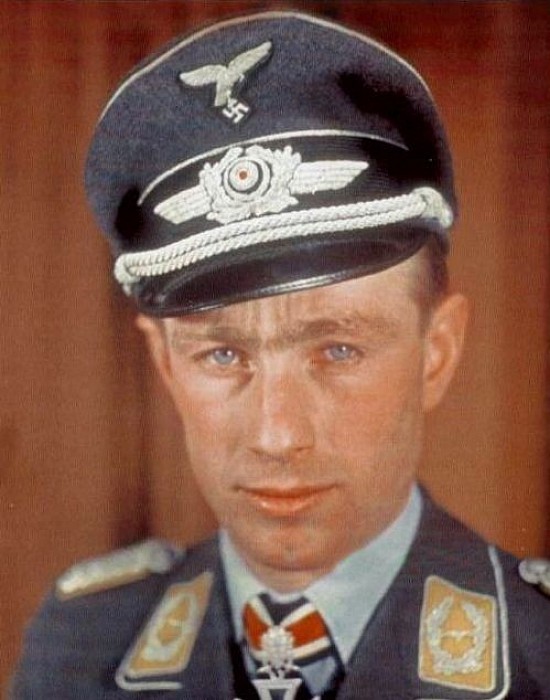
Helmut Lent, nightfighter pilot who shot down ND-423
Dennis next flew on 14th January 1944 with four of his regular crew-mates and two replacements (Rodger Jarvie and J J Waddell for Evans and Hazlehurst) on a mission to Braunschweig (Brunswick), Germany.
They flew in a brand new Lancaster, ND-423, this being its maiden flight.
Dennis spoke of the crew's love for their 'old kite' JB-280 and complained that the new aircraft's guns would take a lot of bedding in before they were effective.
Between Bremen and Hanover five of the Pathfinder Lancasters, including ND-423 were shot down before reaching Braunschweig. German controllers locked on to the aircraft soon after take-off and were able to direct their nightfighters to intercept the bomber stream over Bremen.
Major Helmut Lent, the Kommodore of Stab NJG3 and his Bordfunker Ofw. Kubisch were scrambled 18.19hrs. ND423 was his 81st Abschuss (kill) and the first of three bombers he claimed that night. The aircraft crashed at 18:45 hrs near Üpsen 6 km north of Siedenburg. The majority of the losses occurred between Hanover and in the target area itself. The raid was deemed a failure with little damage reported in Braunschweig most of the bombs having fallen in the surrounding countryside at a cost of 38 aircraft and their crews.
The crew were buried at Hoya Evangelic Cemetery and after the war were moved to Limmer Cemetery, Hanover.